Emma Wetherill
Google review
★★★★★
“He was very professional. He made sure I was comfortable the full time... He is a perfectionist and has great attention to detail.”

Ross White, Banbury Waxing Hut, near Banbury, Oxfordshire
Ever got a few stubborn chin hairs that keep coming back no matter what you do? Or grey hairs that waxing just can’t shift for good? Maybe it’s a handful of hairs left after years of regular waxing, or the same old ingrown hairs turning up in the same old places.
Whatever it is, electrolysis gives us a way of dealing with individual hairs permanently. I’m Ross White, and I’ve started offering it at Banbury Waxing Hut because, for a lot of my clients, it solves the problems other methods simply can’t.
Book NowUnlike laser, electrolysis works on every hair colour and every skin tone. Grey, white, blonde, red, dark: it genuinely doesn’t matter. That makes it a great option for a lot of my clients, especially those noticing more grey coming through as the years tick on.
It’s also completely flexible. There’s no need to sign up to an expensive course of treatment. Simply book a session at a time or we can add onto the end of your regular waxing appointment and gradually work through whatever’s bothering you most.
Back to topElectrolysis is ideal for:
I can also treat the neck, arms and hands, legs and feet, chest and abdomen, and back and shoulders. If you’re not sure whether your area is suitable, just ask and I’ll talk you through it.
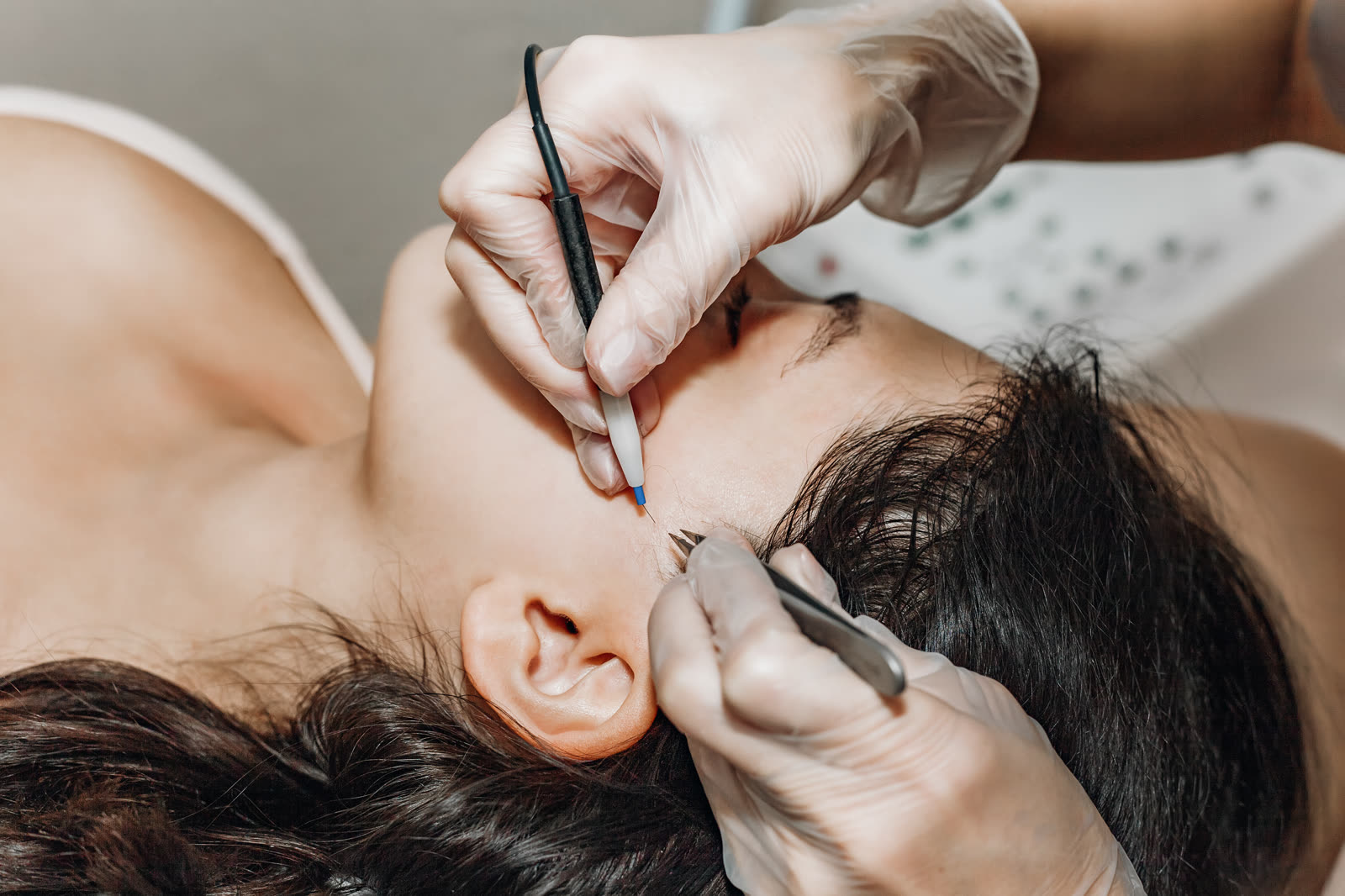
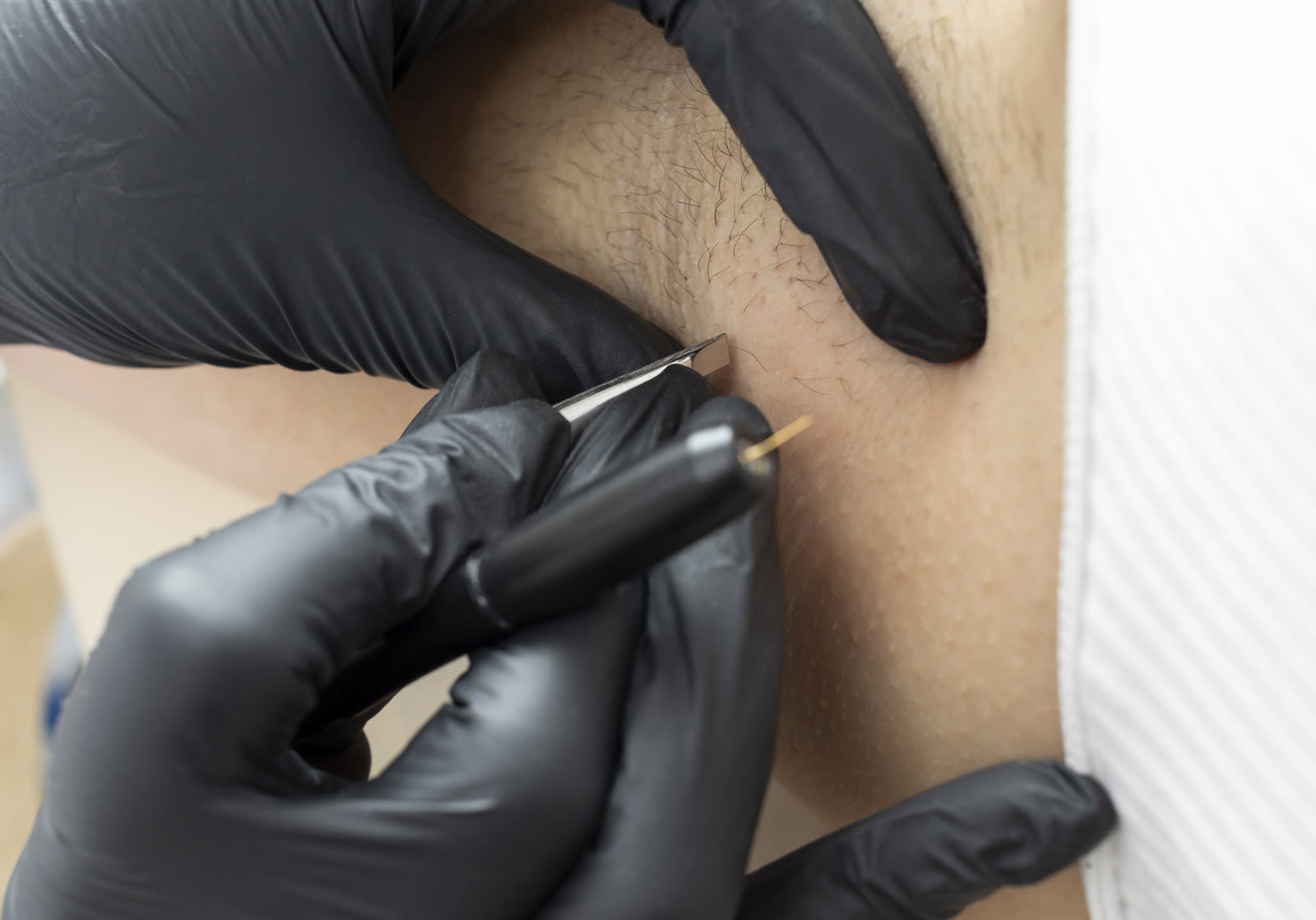
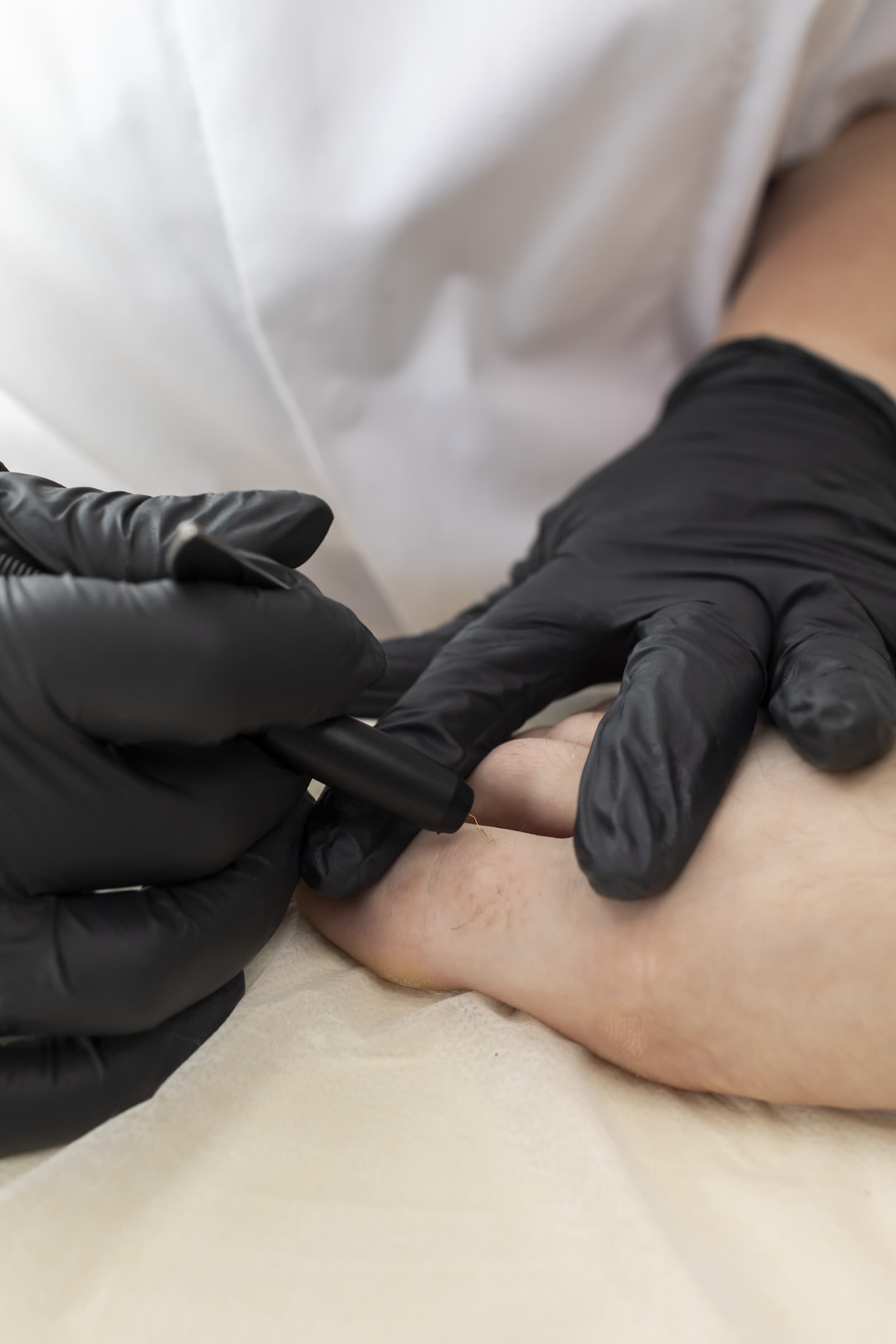

Electrolysis is suitable for everyone, whatever your gender, skin tone or hair colour. It is especially well suited to anyone who wants to remove facial or body hair as part of confirming their gender, because it works on every hair colour and treats each hair individually.
If you are currently transitioning, you will be welcomed here just like everyone else.
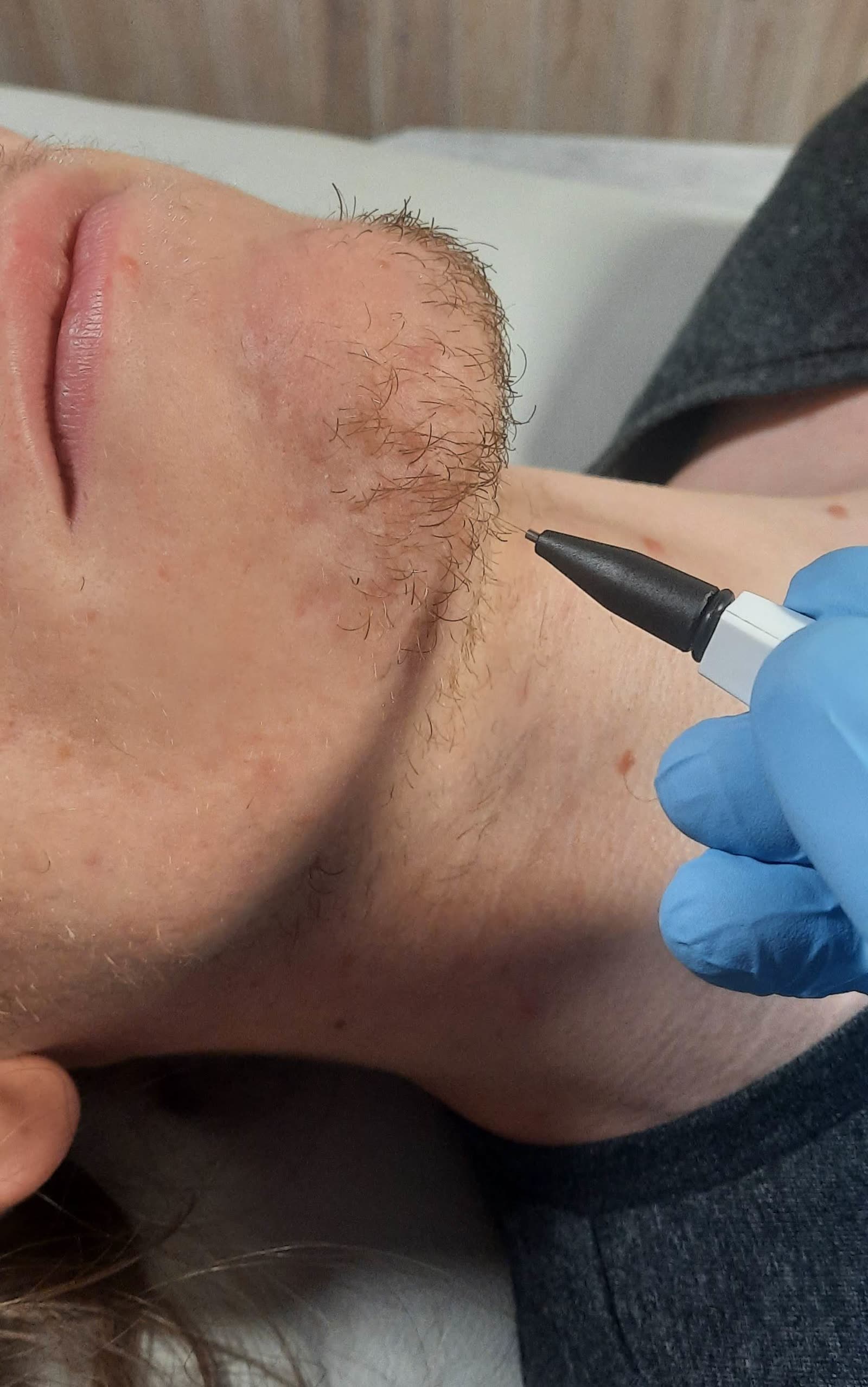
Both treatments have their place, but they are not the same. Here is an honest comparison.
| Electrolysis | Laser hair removal | |
|---|---|---|
| Permanent? | Permanently denatures each treated hair follicle | Temporary reduction only |
| Hair colours | All, including white, grey, red and blonde | Needs dark pigment in the hair |
| Skin tones | All skin tones | Limitations apply for darker skin |
| Facial skin | Each hair is treated individually, with no heat scatter across the surrounding skin | Not generally suitable for the face, as it can sometimes stimulate extra hair growth (paradoxical hypertrichosis) |
| Ingrown hairs | Denatures the follicle, so the hair can’t become ingrown again | Doesn’t target ingrown hairs specifically |
| Small areas | Excellent: follicle by follicle | Less precise on small areas |
Electrolysis is often used to clean up after laser: the grey, white or light hairs it missed, any that have grown back, and any extra hair growth laser may have stimulated. Even if you’ve been told your hair can’t be treated, it’s worth a conversation, because electrolysis doesn’t depend on hair colour or skin tone.
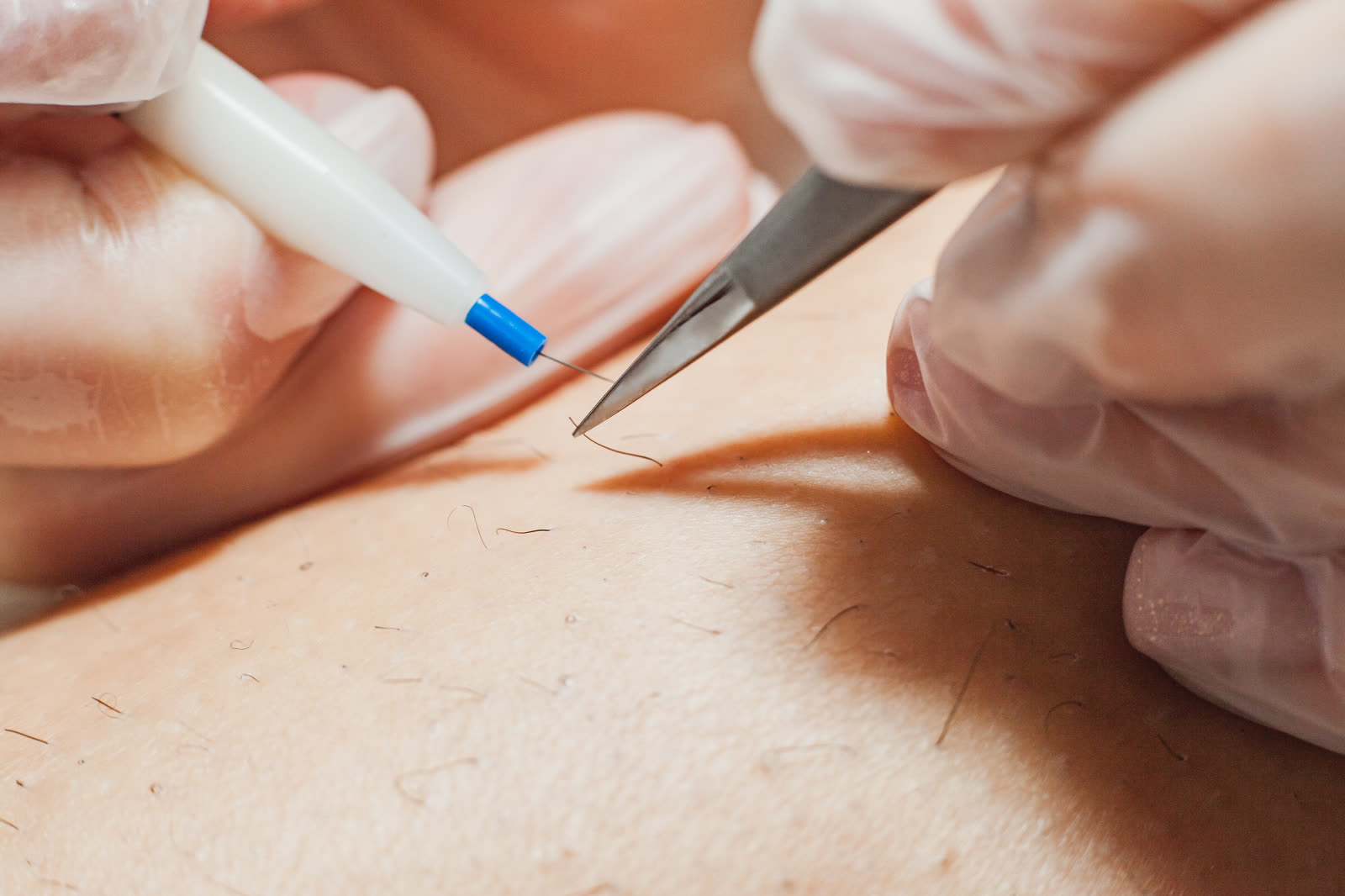
Back to topA very fine probe is guided into the hair follicle, and a tiny electrical current permanently destroys the root.
The insertion itself isn’t painful. It’s the brief two-second treatment afterwards that you’ll feel. It’s certainly noticeable, but most people cope with it very well. Because we’re treating hairs individually, it’s perfect for small areas and slots in easily alongside your normal waxing routine.
There are three types of electrolysis: galvanic (chemical), thermolysis (heat) and blend (a combination of the two). I’m trained in all three, and the one I use is thermolysis, also known as short wave diathermy.
I work with a Sterex SXT machine and single-use, sterile probes in sizes 2 to 4. A probe is never reused.
Everyone’s different. It depends on the area, the amount of hair, and how often you can come in.
Electrolysis causes a localised inflammatory response. That’s simply how it works. How strong it is depends on your skin, your aftercare, and how much energy each hair needed.
For the first 24-72 hours: keep the area clean, avoid heat, saunas, steam rooms, hot tubs, swimming and heavy exercise, avoid direct sun, use moisturiser with SPF 50 twice daily, and skip make-up, deodorants and perfumed products on the area.
Skin check-in photos: please send me a clear photo 2 days after your session and another 7 days after, so I can see how your skin has responded.
You’ll notice the hair becoming visibly less dense. Once a hair is fully treated, it won’t come back. We start with the thicker, more noticeable hairs, since those usually cause the most grief, then move on to the finer ones.
Realistically, we won’t ever get rid of all the very fine vellus hairs (the peach fuzz).
I take my time and avoid overtreating any one area in a single session. Giving your skin the chance to heal between visits is the key to avoiding complications. Progress can sometimes feel slow, but that’s completely normal.
Not all of your hairs are at the surface at the same time. It can take 12-24 months for every hair to cycle up to where it can be treated, which is why a course runs over many months rather than a handful of visits.
Hairs from dormant follicles often appear 3-12 months after treatment starts. They are new hairs, not regrowth from follicles I’ve already treated.
With each session the hair gets finer, lighter and slower to return. Visits become shorter and further apart.
Back to topHormonal hair growth is one of the most common reasons people come to electrolysis. PCOS (polycystic ovary syndrome) was officially renamed polyendocrine metabolic ovarian syndrome (PMOS) in May 2026. It’s the same condition under a new name, so you may see either term.
Every follicle I treat is permanently denatured, hormones or not. But electrolysis doesn’t change what your hormones are doing, and shifts such as PMOS, menopause, HRT or pregnancy can wake dormant follicles and bring new hairs. That isn’t treated hair coming back, but occasional maintenance sessions may be needed.
If you haven’t had a diagnosis, or your hair growth has changed suddenly, please see your GP as well.
Back to topMost people are suitable. I’ll go through your medical history and any medications at your first appointment. A few conditions mean it isn’t the right fit, so please tell me about anything relevant.
Thermolysis, the method I use, doesn’t pass a current through the body and is generally regarded as the safer option in pregnancy, whereas galvanic and blend are not recommended. There are no formal studies of electrolysis in pregnancy, so please check with your midwife or GP first. I also avoid the breasts and abdomen, particularly later in pregnancy.
Not without clearance from your GP.
Get medical advice if you notice spreading redness, increasing warmth, pus, fever, severe pain or blisters after treatment. Also see your GP if you develop sudden coarse facial hair, especially alongside voice changes, irregular periods, marked acne or scalp hair loss. These may need a medical check beyond hair removal.
If you’re already booked in for waxing, electrolysis is an easy treatment to add onto the end of your appointment. We work on the areas that bother you most while you carry on with your regular waxing everywhere else.
The only rule is that the specific hairs we’re treating should not be waxed, so I’ll make clear with you which areas are which. Looking for waxing too? Waxing services, prices and client reviews are on the Banbury Waxing Hut home page.
Back to topI’ve spent 25 years as a registered veterinary nurse, carrying out delicate procedures that demand real precision and steady hands. Guiding a probe into a hair follicle is exactly that kind of work.
Electrolysis genuinely is the only practical way I know of to remove these hairs for good. If you’ve been living with hairs that have irritated you for years, why not book a short session and see how you get on?
Back to topBased on 181 Google reviews of Ross White at Banbury Waxing Hut
“He was very professional. He made sure I was comfortable the full time... He is a perfectionist and has great attention to detail.”
“Ross is attentive to detail and works almost painlessly. I left very satisfied and will definitely be coming back.”
“Ross is awesome, he has a very calm manner and makes you feel totally at ease. He has great knowledge in waxing and massage so you are in safe hands... I looked for a fellow professional with the same ethics, professionalism, training and high quality products that I use.”
“He is really professional, friendly and gentle... I was so scared on my first visit because of my experience, but Ross made sure I was relaxed and had a good experience. He didn’t rush anything and took his time explaining everything he was doing.”
“As a new customer he reached out to me before my appointment to introduce himself and discuss any potential concerns. Throughout the session, he checked in frequently to make sure I was okay, going above and beyond to create a safe, calm environment. He informed me in great detail about aftercare and even checked in with me the day after to make sure everything had gone smoothly.”
Yes. Each hair follicle that is fully treated is permanently denatured. Hormonal changes can wake dormant follicles and bring new hairs, but those are new hairs, not regrowth from treated follicles.
Yes. It works on every hair colour and every skin tone, because it treats each follicle directly rather than relying on pigment.
The probe insertion isn’t painful. The brief two-second treatment afterwards is noticeable, but most people cope very well. EMLA Cream 5% from Boots, applied about 30 minutes beforehand, takes the edge off.
It depends on the area, the amount of hair and how often you can come in. I’ll give you an estimate at your first appointment.
Sessions cost £15 for 15 minutes, up to £60 for 60 minutes, plus a £16 booking fee. See the full prices.
They suit different hairs. Laser needs dark pigment and gives temporary reduction. Electrolysis denatures each treated follicle, works on all colours and skin tones, and is suitable for the face. See the comparison.
Thermolysis is generally regarded as the safer option, but please check with your midwife or GP first. More on safety.
Yes. Both Ross White and the premises at Banbury Waxing Hut are licensed by Cherwell District Council.
Back to topInitially book an electrolysis consultation, to see how you get on, and I’ll happily prepare an estimate from there.
| Initial Consultation | £26 |
| 15 minutes | £31 |
| 30 minutes | £46 |
| 45 minutes | £61 |
| 60 minutes | £76 |
Final fees are reduced when booking multiple services.
07864 980812 (phone or text)
ross@banburywaxing.co.uk
Banbury Waxing Hut, Willow Tree Mooring, Cropredy, Banbury OX17 1PZ. We’re just outside Banbury. Parking and access details: [to add]
